
How Leaders Can Prevent Abuse of Power
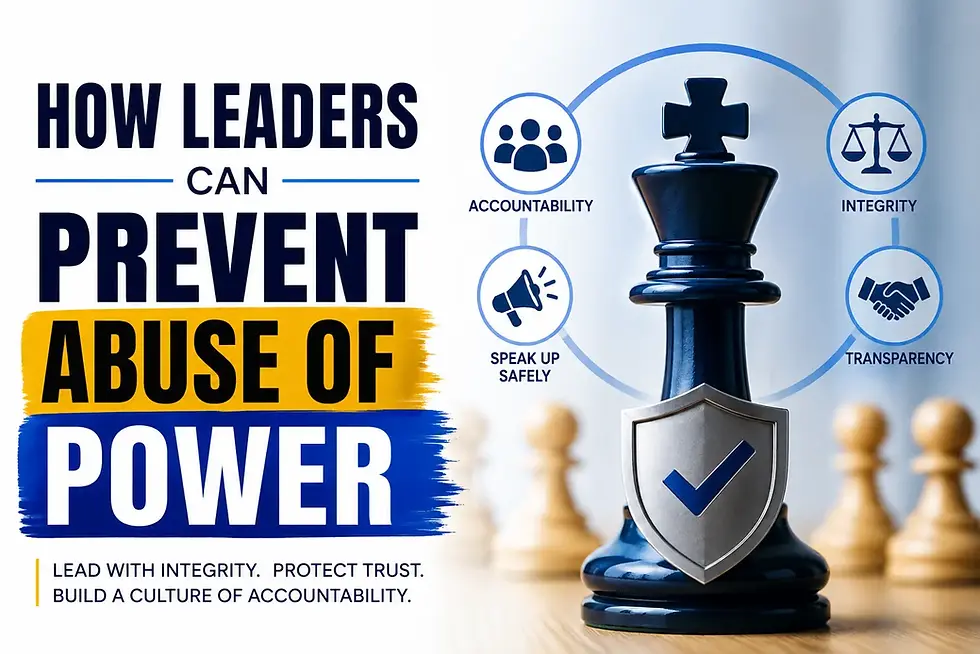
Power is one of the most important tools a leader possesses, but it is also one of the easiest to misuse. A leader can use authority to create order, protect people and move an organisation forward—or use the same authority to intimidate, manipulate and silence others. The difference often comes down to accountability.
Abuse of power rarely begins with an obvious act of misconduct. It can start with small decisions: favouring loyal employees, dismissing criticism, demanding special treatment or believing that leadership position makes certain rules optional. When these behaviours go unchecked, they can gradually become part of the organisation's culture.

Leaders must understand that authority is a responsibility, not a personal entitlement. Holding a senior position does not give someone unlimited control over other people. It creates an obligation to exercise influence fairly, responsibly and within clearly defined boundaries. Leaders who understand this are less likely to confuse obedience with respect.
Build Strong Systems of Accountability
One of the most effective ways to prevent abuse is to make leadership accountable to something beyond the leader's personal judgment. Clear policies, reporting structures, performance reviews, independent oversight and transparent decision-making processes can make it harder for individuals to exercise unchecked authority.
Accountability should not disappear simply because someone occupies the highest position in a team or organisation. In healthy institutions, even powerful leaders can be questioned, investigated and corrected when necessary.
Make It Safe to Speak Up
Abuse thrives in environments where people are afraid to challenge authority. Employees may notice inappropriate behaviour but remain silent because they fear losing their jobs, being punished or damaging their careers.
Leaders can change this by creating credible channels for raising concerns. Employees should know where to report misconduct and should have confidence that complaints will be taken seriously. More importantly, leaders must protect people from retaliation when they raise legitimate concerns.
A leader who says, "You can always come to me," but punishes people for disagreeing has not created psychological safety. They have created silence.
Separate Loyalty From Competence
Leaders who reward loyalty over competence can unintentionally create an environment where people learn that personal allegiance is more valuable than good performance.
This can lead to favouritism, nepotism and a culture where certain individuals are protected from consequences. Over time, others may stop believing that hard work and integrity matter.
Effective leaders establish objective standards for recruitment, promotion, rewards and discipline. Personal relationships should never become a substitute for merit.
Establish Clear Boundaries
Leadership involves relationships, but not every relationship should have unlimited access or influence. Leaders need boundaries around communication, finances, decision-making, workplace relationships and the use of organisational resources.
Boundaries are particularly important when a leader has significant control over another person's career, income or opportunities. The greater the power imbalance, the greater the responsibility to avoid coercion, exploitation or inappropriate pressure.
Invite Constructive Dissent
A leader surrounded only by people who agree with them is vulnerable to poor judgment.
Constructive disagreement is not disloyalty. In fact, it can protect leaders from their own blind spots. Organisations should encourage people to question assumptions, identify risks and challenge decisions respectfully.
Leaders should ask themselves regularly: "Do people disagree with me because they genuinely agree with my decisions—or because they are afraid of what happens when they don't?"
That question can reveal a great deal about the culture around them.
Do Not Create Exceptions for Yourself
One of the clearest signs that power is being abused is when a leader expects everyone else to follow rules that they themselves ignore.
If employees must account for expenses, the leader should not treat organisational money as personal funds. If staff are expected to respect working hours and procedures, leadership should not assume those expectations are beneath them.
Rules become meaningful when leaders demonstrate that they apply to everyone.
Correct Misconduct Early
Small violations should not always be dismissed as harmless because the person involved is talented, influential or successful. Ignoring misconduct because someone is "too valuable to lose" sends a dangerous message to everyone else.
Early intervention can prevent inappropriate behaviour from becoming systemic. It also communicates that performance does not provide immunity from accountability.
Lead With Self-Awareness
Perhaps the most difficult safeguard against abuse of power is self-awareness. Leaders should regularly examine how their behaviour affects the people around them.
They should be willing to ask: Am I listening? Do people feel comfortable telling me the truth? Do I treat certain people differently? Have I become defensive when challenged? Am I using my position to get something I would not be entitled to without it?
Leadership does not eliminate human weaknesses. It simply gives those weaknesses greater consequences when they go unchecked.
Power Should Be Designed to Be Accountable
The best protection against abuse is not simply finding leaders with good intentions. Good intentions matter, but systems matter too.
A responsible organisation creates structures where power can be questioned, decisions can be reviewed and misconduct can have consequences. It does not depend entirely on the character of one individual.
Ultimately, good leadership is not demonstrated by how much control a leader can exercise, but by how responsibly they exercise it. The strongest leaders understand that authority is temporary, accountability is essential and the people they lead are not tools for achieving personal ambitions.
Power becomes dangerous when nobody can challenge it. Leadership becomes trustworthy when power is accompanied by boundaries, transparency and accountability.


Comments